
PPE for Muscular Build UK: The Problem No One Talks About
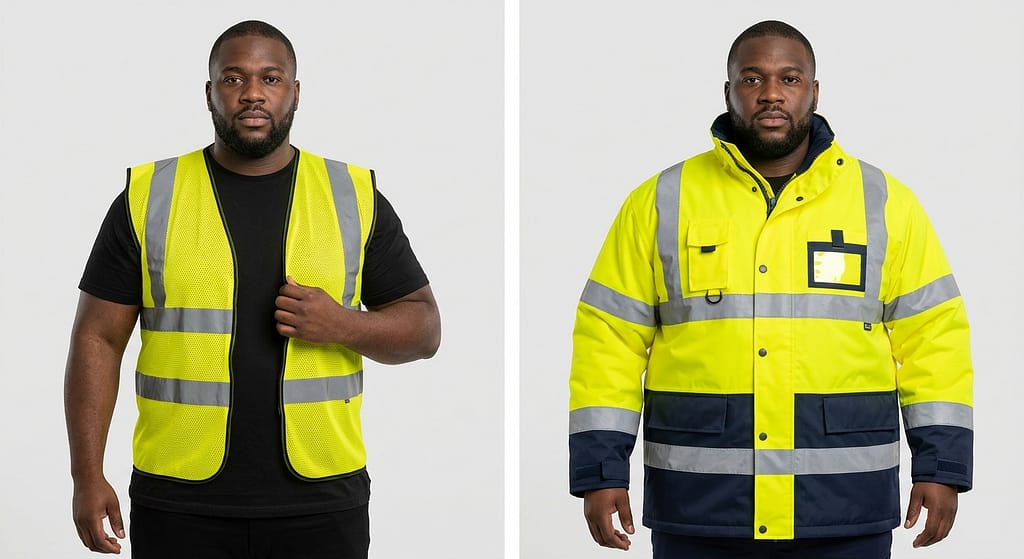
PPE for muscular build UK workers is one of the most overlooked problems on construction sites today. Across scaffolding, demolition, bricklaying, and groundworks, tradesmen with strong, athletic builds are expected to wear PPE designed for completely different body types.
This leads to a frustrating and often dangerous reality:
- Jackets that won’t zip over the chest
- Trousers that restrict movement
- Harnesses that dig into shoulders
Despite strict UK PPE safety regulations, proper fit is still widely ignored.
If you’ve ever struggled with tight shoulders or oversized gear, you’re dealing with the muscular vs overweight PPE problem.
Table of Contents
Why PPE for Muscular Build UK Workers Fails
Most PPE is built using outdated sizing systems. These systems assume:
- Chest, waist, and height increase evenly
- Body shapes are consistent
- Workers fit into standard proportions
But that’s not reality.
Tradesmen with muscular builds typically have:
- Wide shoulders
- Thick chest and back
- Strong legs
- Lower body fat distribution
This creates a mismatch in UK PPE sizing, making standard gear unreliable.
For more general sizing principles, see this UK PPE sizing guide.
The Muscular vs Overweight PPE Problem
The core issue is simple:
Two workers can wear the same size—but only one fits properly.
A muscular worker and an overweight worker may both wear XL, but:
- One needs space in shoulders and chest
- The other needs space around the waist
Standard PPE doesn’t account for this difference.
This leads to poor construction PPE fit issues, affecting comfort and safety.
7 Reasons Standard PPE Doesn’t Fit Muscular Workers
1. Shoulder Width Is Ignored
Most PPE is too narrow across the shoulders, causing restriction.
2. Chest-to-Waist Ratio Is Wrong
Muscular builds don’t follow standard sizing proportions.
3. Sleeves Are Too Tight
Arm movement becomes limited—especially when lifting.
4. Trousers Restrict Thigh Movement
A major issue for trades requiring climbing and squatting.
5. Harnesses Are Poorly Balanced
Improper fit leads to unsafe weight distribution.
6. Layering Isn’t Considered
UK weather demands layering—but PPE rarely accounts for it.
7. Sizing Up Creates New Risks
Oversized gear introduces hazards like snagging and tripping.
How to Choose the Right PPE for Muscular Build UK Workers
Prioritise Shoulder Fit
Always check:
- Shoulder seam placement
- Arm mobility
- Upper back flexibility
Test Movement
Don’t rely on labels. Move naturally when trying gear.
Choose Flexible Materials
Look for:
- Stretch fabrics
- Reinforced panels
- Ergonomic designs
Select Proper Trousers
For better fit, read: best work trousers for muscular legs
Account for Layers
Ensure your PPE works with hoodies and thermals.
Common PPE Mistakes That Cause Problems
Many workers unknowingly make things worse.
Common errors include:
- Buying based on size label only
- Ignoring movement testing
- Choosing cheap PPE over fit
- Wearing oversized gear
For more, see: common PPE safety mistakes
Real UK Site Example
A demolition worker with a muscular build buys standard PPE:
- XL = too tight
- XXL = too loose
He ends up with gear that:
- Restricts movement
- Increases safety risks
This is exactly why PPE for muscular build UK workers needs more attention.
UK Standards and Why Fit Still Matters
Even with strict UK PPE safety regulations, fit is often overlooked in practice.
For official guidance, refer to:
These define requirements—but not real-world fit challenges.
Final Thoughts
The issue with PPE for muscular build UK workers isn’t going away anytime soon.
But understanding how to choose the right gear gives you a major advantage.
Better PPE fit means:
- Safer movement
- Less fatigue
- Better performance
And ultimately—it helps you work smarter and safer on-site.